
Crafting a Comprehensive Chapter One: The Foundation of Your Dissertation
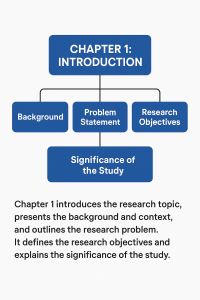
The introductory chapter of a dissertation serves as the gateway to your research, establishing the groundwork upon which your entire study rests. For postgraduate students embarking on this rigorous academic journey, Chapter One represents a critical opportunity to contextualize your research, articulate your scholarly contribution, and engage your readers with the significance of your work. Understanding the essential components and strategic considerations for this chapter is paramount to developing a robust and compelling dissertation.
Background: Establishing Context and Rationale
The background section provides the foundational context necessary for readers to understand your research topic. This component should situate your study within the broader academic landscape, presenting a clear narrative that traces the evolution of your research area. Begin by introducing the general field of study before progressively narrowing your focus to the specific issue your research addresses.
When crafting this section, postgraduate students must demonstrate comprehensive awareness of the theoretical frameworks, historical developments, and contemporary debates relevant to their topic. This requires extensive preliminary reading and a nuanced understanding of how various scholarly perspectives intersect. The background should naturally lead readers toward recognizing a gap in existing knowledge or an unresolved problem that warrants further investigation. Avoid overwhelming readers with excessive detail; instead, provide sufficient context to make your research problem comprehensible and compelling to both specialists and educated generalists.
Problem Statement: Identifying the Research Gap
The problem statement constitutes the core of your introductory chapter, explicitly articulating what your research seeks to address. This section must precisely identify the specific problem, issue, or knowledge gap that justifies your study. Effective problem statements demonstrate that you have identified a legitimate scholarly concern that merits systematic investigation.
Postgraduate students should craft their problem statements with clarity and precision, avoiding vague generalizations or overly broad assertions. The problem must be researchable within the constraints of your academic program, methodology, and available resources. Consider framing your problem statement in terms of what is currently unknown, inadequately understood, or insufficiently addressed in existing literature. This section should compellingly argue why this problem matters and why it requires immediate scholarly attention.
Significance of the Study: Justifying Your Research
Following from the problem statement, the significance section explains why your research matters and who will benefit from your findings. This component addresses the “so what?” question that underlies all scholarly inquiry. Postgraduate students must articulate both the theoretical contributions and practical implications of their work.
Discuss how your research will advance academic knowledge, potentially challenging existing theories, filling identified gaps, or providing new insights into established phenomena. Additionally, address the practical applications of your findings for practitioners, policymakers, or specific stakeholder communities. The significance section should demonstrate that your research represents a worthwhile investment of time, resources, and intellectual energy, justifying its place within the academic discourse.
Research Objectives: Defining Your Study’s Direction
The research objectives section explicitly states what your study aims to achieve. These objectives should flow logically from your problem statement and must be specific, measurable, achievable, relevant, and time-bound. Postgraduate students should distinguish between general aims and specific objectives, with the latter providing concrete, actionable goals that guide your methodological approach.
Well-formulated research objectives serve multiple purposes: they provide clear direction for your research design, establish criteria for evaluating your study’s success, and help readers understand precisely what you intend to accomplish. Typically expressed using action verbs such as “examine,” “analyze,” “evaluate,” or “compare,” these objectives should be realistic yet sufficiently ambitious to constitute a meaningful scholarly contribution.
Strategic Considerations for Excellence
Throughout Chapter One, maintain academic rigor while ensuring accessibility. Your writing should demonstrate sophisticated thinking without becoming unnecessarily obscure. Use precise terminology appropriately, define key concepts clearly, and construct logical arguments that build progressively toward your research objectives. Remember that this chapter establishes your credibility as a researcher and sets expectations for the quality of scholarship that follows.
By thoughtfully addressing each component, you create a compelling foundation that justifies your research and guides readers through the subsequent chapters of your dissertation.